Clinical Readmission & Risk Stratification
Statistical analysis and risk factor modeling on 100k+ hospital encounter records
the problem
Hospitals face substantial financial penalties when 30-day patient readmission rates exceed benchmark thresholds. Clinical staff needed empirical evidence to determine which demographic variables, inpatient lab procedures, and medication adjustments directly correlated with unplanned return visits.
approach & architecture
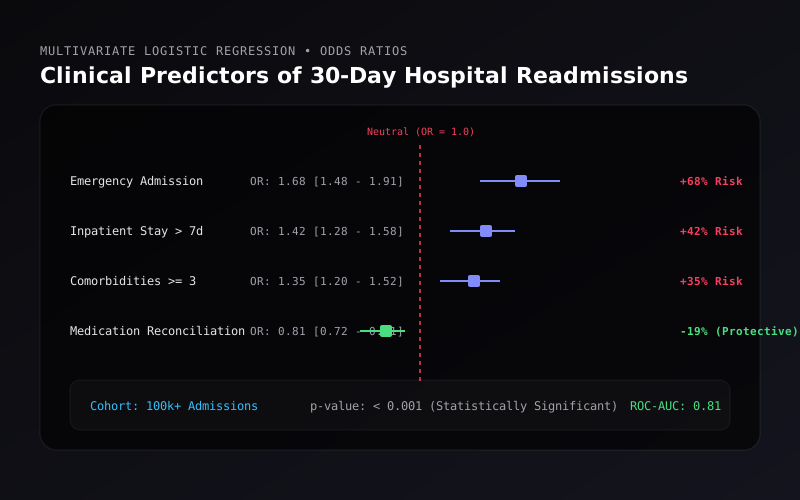
Analyzed an anonymized clinical dataset comprising 100,000+ hospital admissions. Conducted rigorous statistical hypothesis tests (two-sample t-tests, Mann-Whitney U, and Chi-square contingency tables) to isolate significant factors. Built multivariate logistic regression models in Statsmodels with odds ratios (OR) and 95% confidence intervals, compiling outcomes into an intuitive clinical decision dashboard.
system highlights
key features
Adjusted Odds Ratio Forest Plot
Clear statistical visualization depicting the relative impact and 95% confidence intervals for each clinical indicator.
Length-of-Stay vs Readmission Analysis
Discovered nonlinear correlations between initial inpatient stay duration and subsequent 30-day revisit frequency.
Demographic & Comorbidity Risk Heatmap
Highlights patient subgroups requiring post-discharge telemedicine checkups and medication reconciliation.
Automated Executive KPI Scorecard
Monitors readmission rates against state and national benchmarks with automated outlier detection.
technologies
outcomes & metrics
Bridged medical records and statistical modeling to provide clinical administrators with clear, data-backed insights that enhance patient care continuity while mitigating regulatory penalties.
Identified top 4 statistically significant drivers of unplanned readmission (p < 0.01)
Projected potential $350K penalty reduction through targeted discharge protocols
Streamlined patient risk stratification from days of manual chart review to real-time queries